Quick Answer
For restaurants across the GTA and Southern Ontario, NFPA 96–aligned restaurant exhaust cleaning reduces fire hazards and keeps ventilation efficient. Robinhood Cleaners (serving All Over Ontario at All Over Ontario) provides NFPA96 certified cleaning, WSIB insured crews, and 24/7 scheduling for hoods, ducts, fans, filters, and grease traps.
Quick Summary
- What you’ll learn: How hood and duct cleaning works, NFPA 96 compliance essentials, best practices, and inspection checklists.
- Why it matters: Grease fuels fires; clean exhaust systems improve air quality, uptime, and compliance.
- Who this is for: GTA restaurant owners, managers, and facility leads who need certified, insured, 24/7 service.
- How we help: Robinhood Cleaners delivers NFPA96 certified cleaning, WSIB insured crews, filter exchange, fan belt replacement, equipment and grease trap service.
Local Tips
- Tip 1: Plan exhaust cleaning after service ends to avoid Gardiner/QEW traffic windows and ensure rooftop access is available before building security locks.
- Tip 2: In winter, schedule rooftop fan service during daylight; ice and wind on GTA rooftops can slow work and require extra safety gear.
- Tip 3: Coordinate with your building’s property manager for duct/fan access and elevator reservations—this keeps the job on time and minimizes disruption.
IMPORTANT: These tips align to Robinhood Cleaners’ 24/7 operations and certified focus on restaurant exhaust cleaning, fan belts, filters, and grease traps across Southern Ontario.
What Is Restaurant Exhaust Cleaning?
It’s the thorough removal of grease and combustible residues from hoods, ducts, fans, and filters that vent cooking vapors. In GTA restaurants, this work follows NFPA 96 guidance and local fire codes to reduce ignition risk and maintain safe airflow.
- Scope includes:
- Hood interiors, plenum, and accessible duct runs
- Exhaust fan housing, blades, and hinges
- Baffle filters (cleaning and exchange)
- Nearby surfaces impacted by overspray and grease mist
- Certification matters: NFPA96 certified cleaning proves the work meets published fire safety standards—what inspectors expect across the GTA.
- Related services: Fan belt replacement, grease trap service, equipment cleaning, and power washing keep the whole kitchen safer and more efficient.
Robinhood Cleaners focuses exclusively on commercial kitchen systems, bringing NFPA96 certification and WSIB insurance to every job across Ontario.
Why Exhaust Cleaning Matters in the GTA
Grease accumulates quickly in high‑volume kitchens. Without cleaning, heat can ignite residue inside ducts and hood cavities. The result is fast-spreading fire.
- Fire hazard reduction: Removing grease interrupts the fuel source. This is the single most important benefit.
- Air quality improvement: Efficient ventilation removes smoke, odors, and airborne particles to protect staff comfort.
- Regulatory compliance: NFPA 96 and local fire codes are the playbook inspectors use; clean systems help you pass with confidence.
- Operational uptime: Clean fans and ducts move air better, reducing heat stress on staff and equipment.
- Insurance readiness: Documented, certified service helps demonstrate due diligence if incidents occur.
As of 2026, GTA inspectors continue to reference NFPA 96 during checks. Having a certified partner means fewer surprises and faster approvals.
How Hood and Duct Cleaning Works
While every kitchen is different, certified teams follow a repeatable, inspector-friendly process.
Step-by-Step Process
- Pre-inspection and prep: Photograph current conditions; protect equipment and floors with coverings; isolate electrical if required.
- Disassemble components: Remove baffle filters, access panels, and fan housings for full reach.
- Apply degreasers: Use appropriate chemistry on hoods, plenums, ducts, and fans; allow dwell time to break heavy buildup.
- Mechanical agitation: Brush, scrape, and power wash to bare metal where accessible and safe.
- Fan service: Clean housings and blades; check fan belts; confirm spin and vibration are within normal range.
- Filter cleaning & exchange: Deep clean or swap for ready-to-install filters.
- Final rinse and polish: Remove residue, wipe, and polish stainless surfaces.
- Post-inspection: Take after-photos, reassemble, test the system, and place compliance stickers.
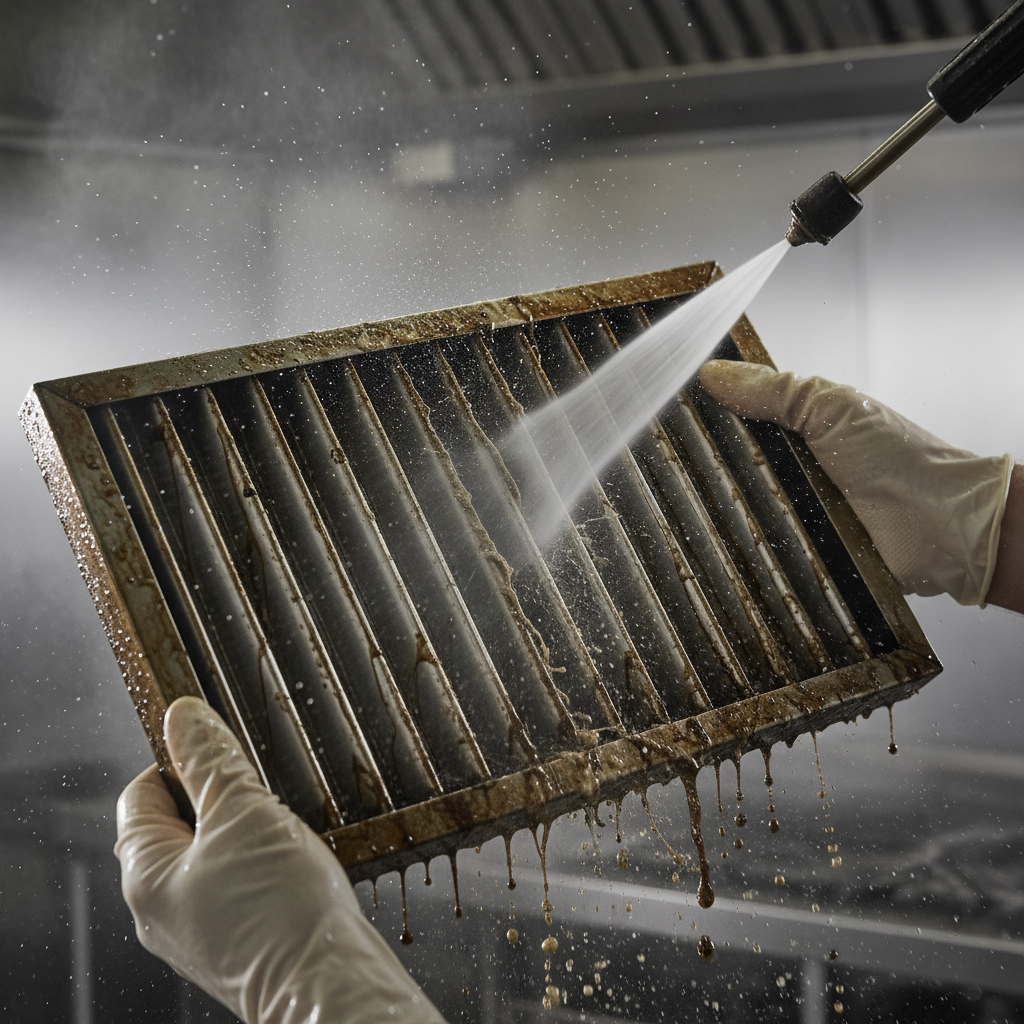
Visual: Filter Cleaning Detail
Filters catch a surprising amount of grease. Keeping them clean improves airflow and reduces duct deposits.
Process Snapshot (At-a-Glance)
| Step | Action | Responsible | Notes |
|---|---|---|---|
| 1 | Pre-inspect, protect, document | Certified crew lead | Photos before/after for compliance |
| 2 | Disassemble, open access | Technicians | Access panels, filters, fan housing |
| 3–6 | Degrease, agitate, rinse, service fan & filters | Technicians | Bare metal where safe and accessible |
| 7–8 | Polish, reassemble, test | Crew lead | Sticker, service log, recommendations |
For specifics on hood cleaning scope, see our commercial hood cleaning service page for Ontario kitchens.
Methods and Service Types
Not all grease is equal. Different areas demand different methods.
Core Methods
- Hot water pressure washing: Forces grease off to reach bare metal on accessible surfaces.
- Chemical degreasing: Breaks down baked-on residues in hoods, plenums, and ducts.
- Manual scraping: Targets stubborn, thick deposits inside corners and seams.
- Detail polishing: Restores stainless steel surfaces around the hood and line.
Complementary Services
- Filter cleaning & exchange: Keep a ready rotation of clean baffle filters to maintain airflow.
- Fan belt replacement: Replace worn belts to prevent slippage and airflow loss.
- Grease trap service: Avoid clogs and odors; maintain plumbing efficiency.
- Equipment cleaning: Deep-clean ovens, grills, and refrigeration gaskets to improve hygiene.
- Power washing: Exterior pads, walls, and service areas stay clean and safe.
Explore our broader restaurant cleaning services for a complete protection plan around your hood system.
Best Practices and Scheduling
Consistency is the difference between passing and scrambling.
Scheduling by Cooking Volume
- High volume (solid fuels, fryers, grills): Monthly to quarterly exhaust cleaning.
- Moderate volume (standard line service): Quarterly to semiannual.
- Light volume (low-grease kitchens): Semiannual to annual, with inspections between.
Operational Must-Dos
- Maintain a filter rotation: Keep a clean set on standby for quick swaps.
- Log service dates: Put cleaning and filter changes on the same calendar you use for staff scheduling.
- Coordinate access: Ensure rooftop and mechanical room keys are ready; plan around delivery windows.
- Document everything: Before/after photos, sticker, and service logs live in a binder or shared drive.
- Inspect belts and fans: A quick check prevents noise, vibration, and airflow loss.
Compliance and Communication
- Align to NFPA 96: Ask for certification on every visit and keep documentation handy.
- Prep staff: Let the line know when cleaning happens so equipment is clear and cool.
- Confirm scope: Hood, duct, fan, filters, and surrounding areas should all be included.
If you’re unsure how often to schedule, our team can assess cooking volume and build a rotation that fits your hours and inspection cycle.
Tools, Materials, and Resources
Professional crews bring specialized gear designed for commercial kitchens.
- Degreasers and detergents: Food-service appropriate chemistry used per label.
- Pressure washers and steam: Hot water control with proper containment to avoid overspray.
- Scrapers and brushes: For corners and seams that hold grease.
- Lift and roof safety gear: Harnesses, hinges, and supports for rooftop fan access.
- Access panel kits: For reaching hidden duct sections where allowed.
- Service logs and stickers: Compliance records for inspectors and insurers.
To see how oven vents and related systems fit into a whole-kitchen plan, visit our oven vent cleaning overview.
Mini Case Studies (GTA)
Here are quick, anonymized examples from Southern Ontario kitchens we serve.
1) High-Volume Grill Line Near Union Station
- Problem: Heavy grease in plenum and early fan belt wear producing squeal at peak hours.
- Action: Quarterly hood/duct cleaning, filter exchange rotation, and belt replacement.
- Result: Noticeably better airflow, quieter fan operation, and a smooth city inspection.
2) Midtown Bistro with Seasonal Peaks
- Problem: Inconsistent cleaning cadence caused duct hotspots and smoky prep areas.
- Action: Shifted to semiannual cleaning with midpoint inspections and on-demand filter swaps.
- Result: Balanced airflow, fewer odor complaints, and simpler staff scheduling.
3) Food Hall Concept in the Suburbs
- Problem: Multiple vendors sharing a common exhaust stack created uneven grease loading.
- Action: Coordinated after-hours service across stalls, added access panels where allowed, documented each run.
- Result: Even cleaning coverage, better inspection outcomes, and a unified service log.
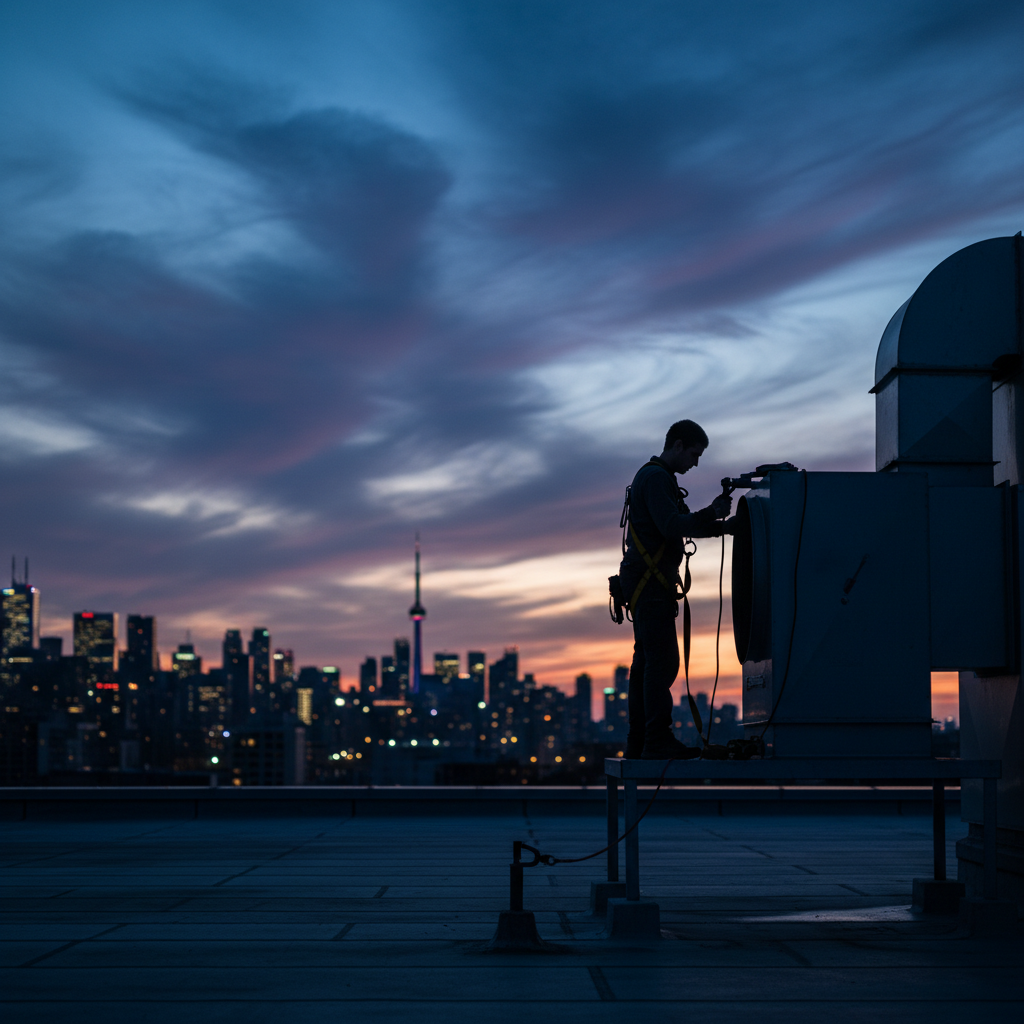
Rooftop Fan Service—GTA Context
Rooftop conditions and access can make or break service windows. The right safety gear and hinges speed up safe disassembly.
Need a Certified Crew on Your Schedule?
- NFPA96 certified cleaning and WSIB insured technicians
- 24/7 availability to match your hours
- Hoods, ducts, fans, filters, belts, equipment, and grease traps
See how we protect Ontario kitchens in our Ontario restaurant cleaning overview, then book your assessment.
FAQ
How often should a GTA restaurant clean its hood and ducts?
Match frequency to cooking volume: monthly to quarterly for high-grease operations (grills, fryers), quarterly to semiannual for moderate volume, and semiannual to annual for light volume. Inspections in between help you adjust. Certified teams can assess loading and recommend a schedule that aligns with NFPA 96 and local inspections.
What’s included in NFPA96 certified cleaning?
Expect hood, plenum, accessible ductwork, and exhaust fan cleaning to bare metal where safe and reachable, plus filter cleaning/exchange. You’ll receive documentation—before/after photos, service log, and a compliance sticker. Ask about complementary services like fan belt checks, grease trap maintenance, and equipment cleaning.
Can my own staff handle filter cleaning between services?
Yes—many teams rinse filters between professional visits. Keep a rotation: clean set installed, dirty set soaking, and a backup ready. Professional filter exchange ensures periodic deep cleaning and helps maintain airflow and lower duct loading.
What happens if my fan belt fails during a rush?
Airflow drops, the kitchen heats up, and smoke/odors can build fast. During certified service, belts are checked and replaced if worn. Proactive belt checks keep ventilation stable under peak load and prevent emergency downtime.
Will cleaning disrupt service?
It doesn’t have to. Certified providers like Robinhood Cleaners work 24/7. Most GTA restaurants schedule after close or before open. Clear access, keys, and elevator reservations keep the visit efficient.
Conclusion and Next Steps
- Certified matters: NFPA96 cleaning helps you pass inspections and cut fire risk.
- Consistency wins: Tie your schedule to cooking volume and keep a filter rotation.
- Document everything: Photos, logs, and stickers support insurance and inspections.
- Think whole-system: Hoods, ducts, fans, filters, belts, equipment, and grease traps all work together.
Key Takeaways
- Restaurant exhaust cleaning GTA is essential fire prevention—not optional maintenance.
- Certified, WSIB insured crews protect your business and your people.
- 24/7 scheduling means no disruption to front-of-house revenue hours.
Ready to align your kitchen to NFPA 96 and breeze through inspections? Review our commercial hood cleaning details and connect with our team.